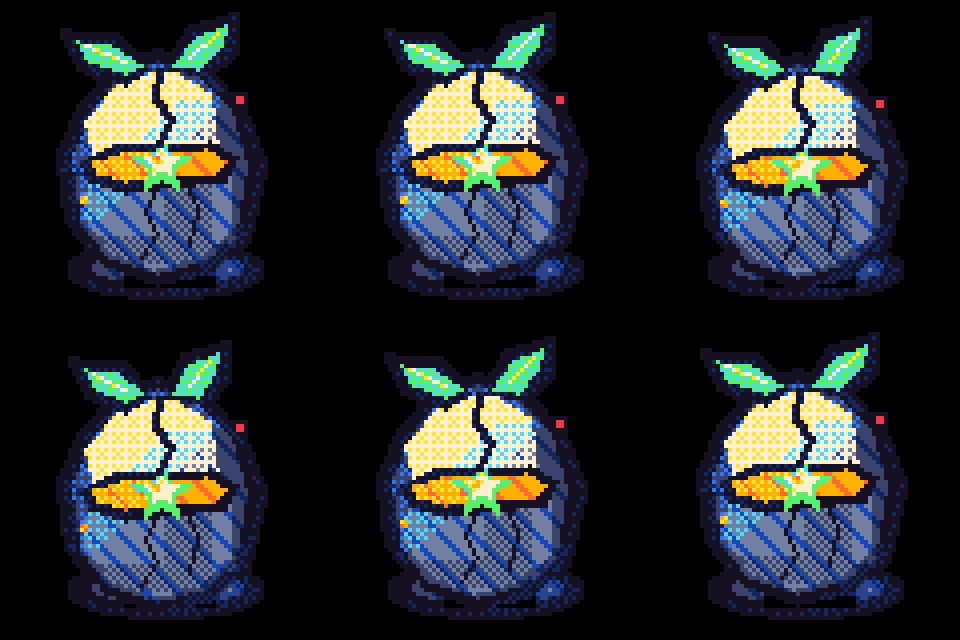

Art-Version Archive
v1–v2 / Establishing the asset language
The first output defined core states, Makers, Tools, Gifts, UI icons and FX families. Coverage mattered more than a unified silhouette or world semantics, and several objects still resembled generic science-fiction symbols.
v3 / SNES INK8
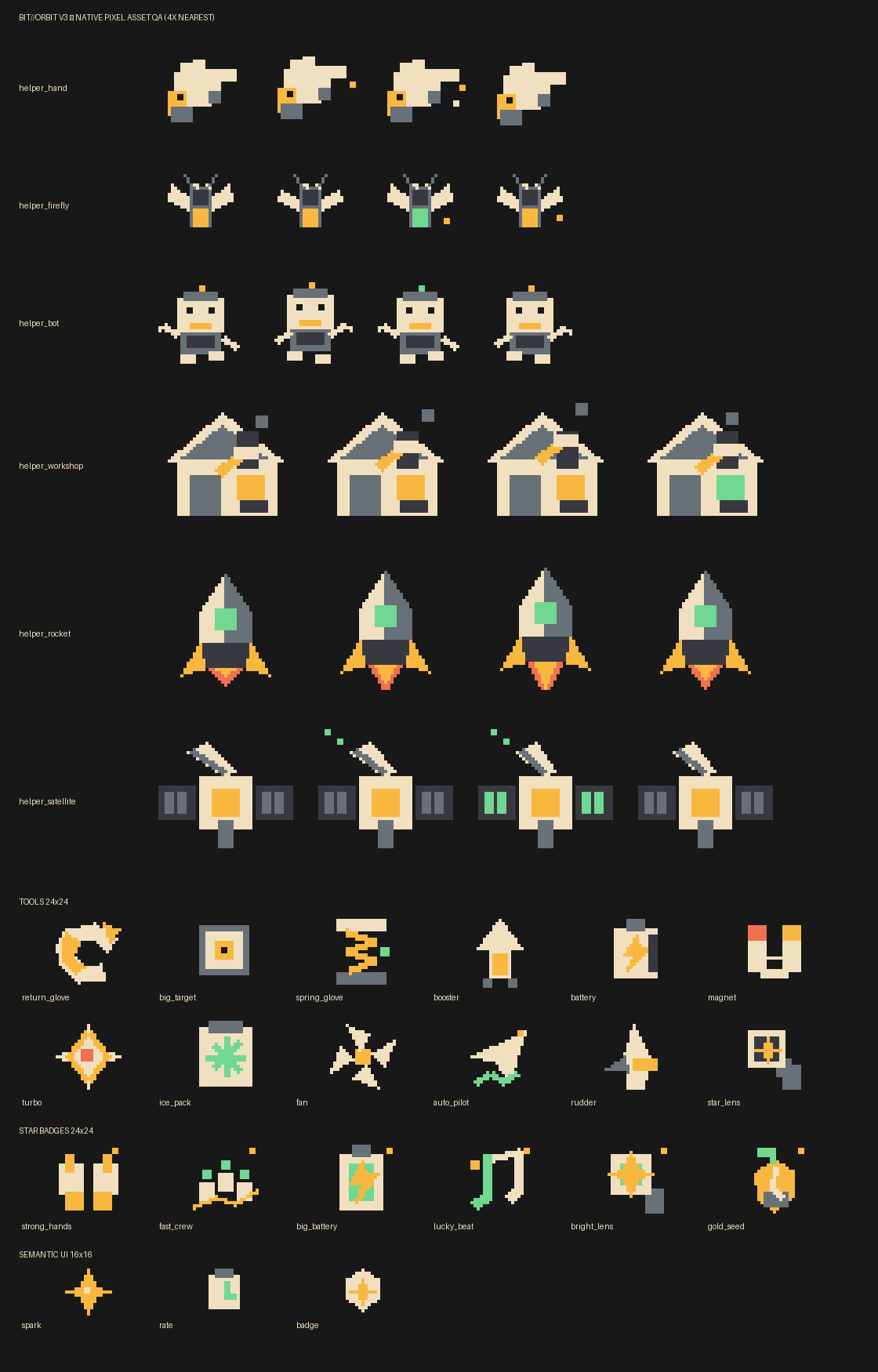
v3 locked an eight-color tendency, coarse master texels and the star-workshop proposal. Abstract modules began turning into readable objects. Separate Maker and icon sheets checked motion phase and static silhouette.
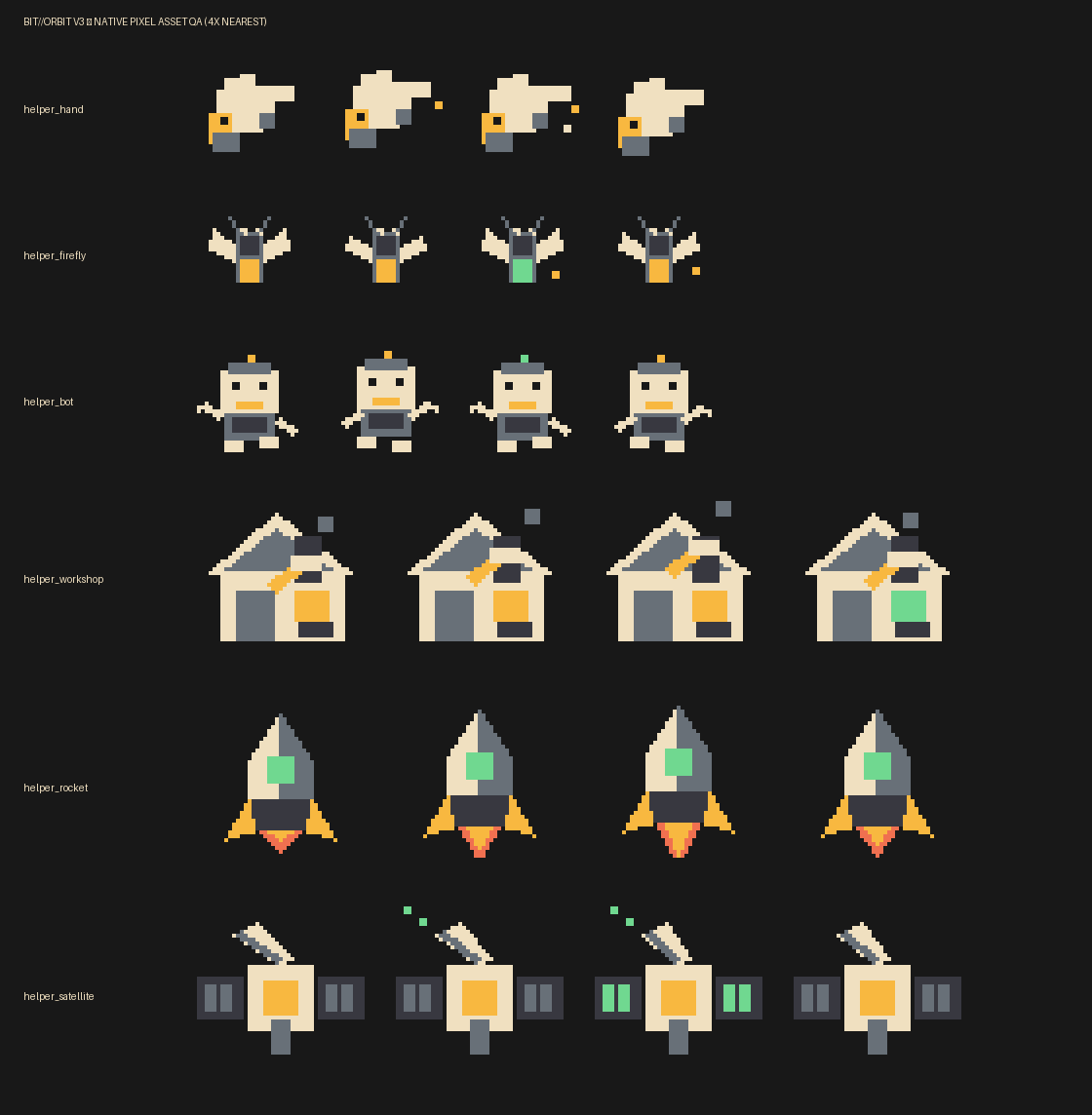
v4 / EPIC DIORAMA
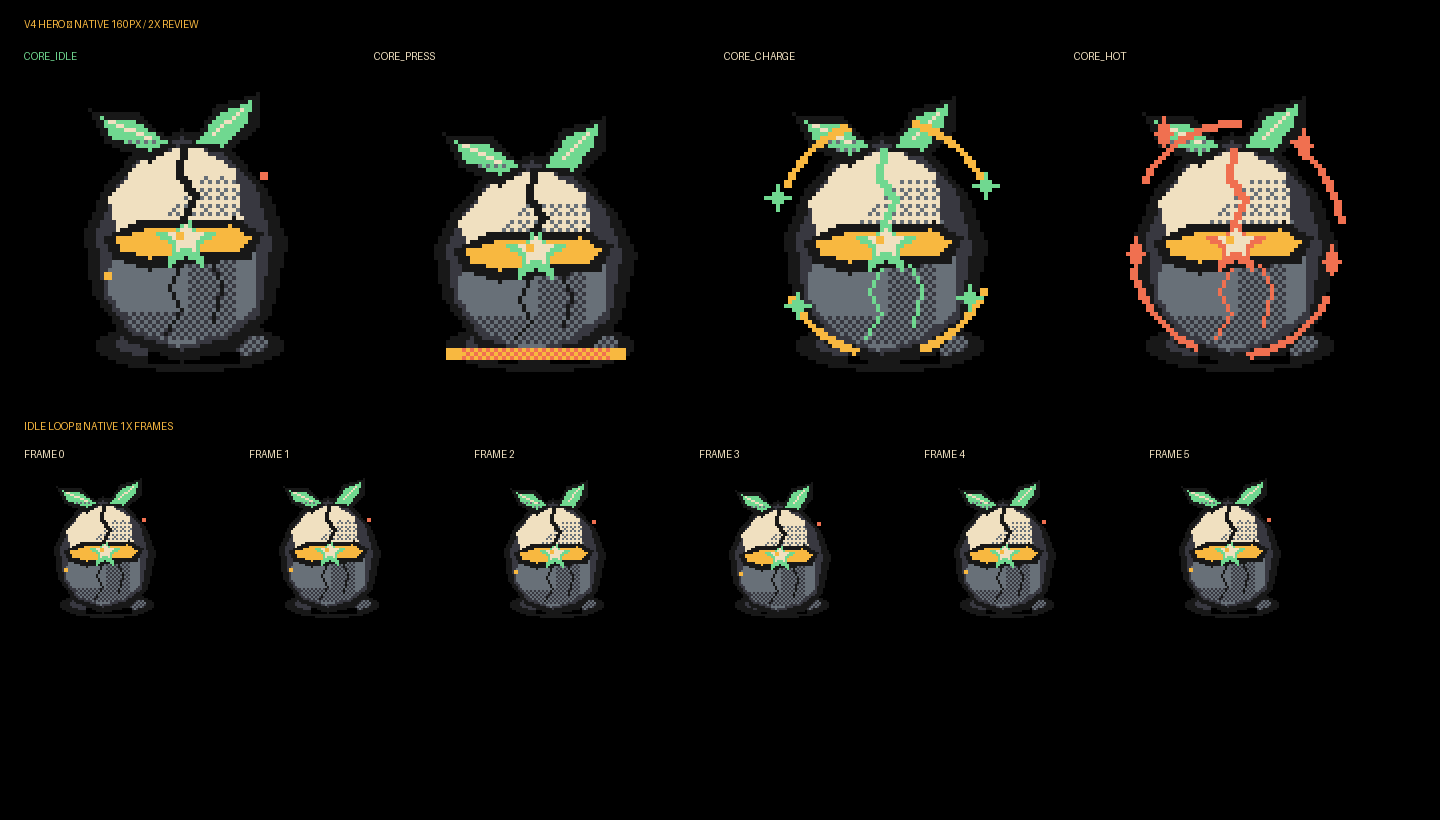
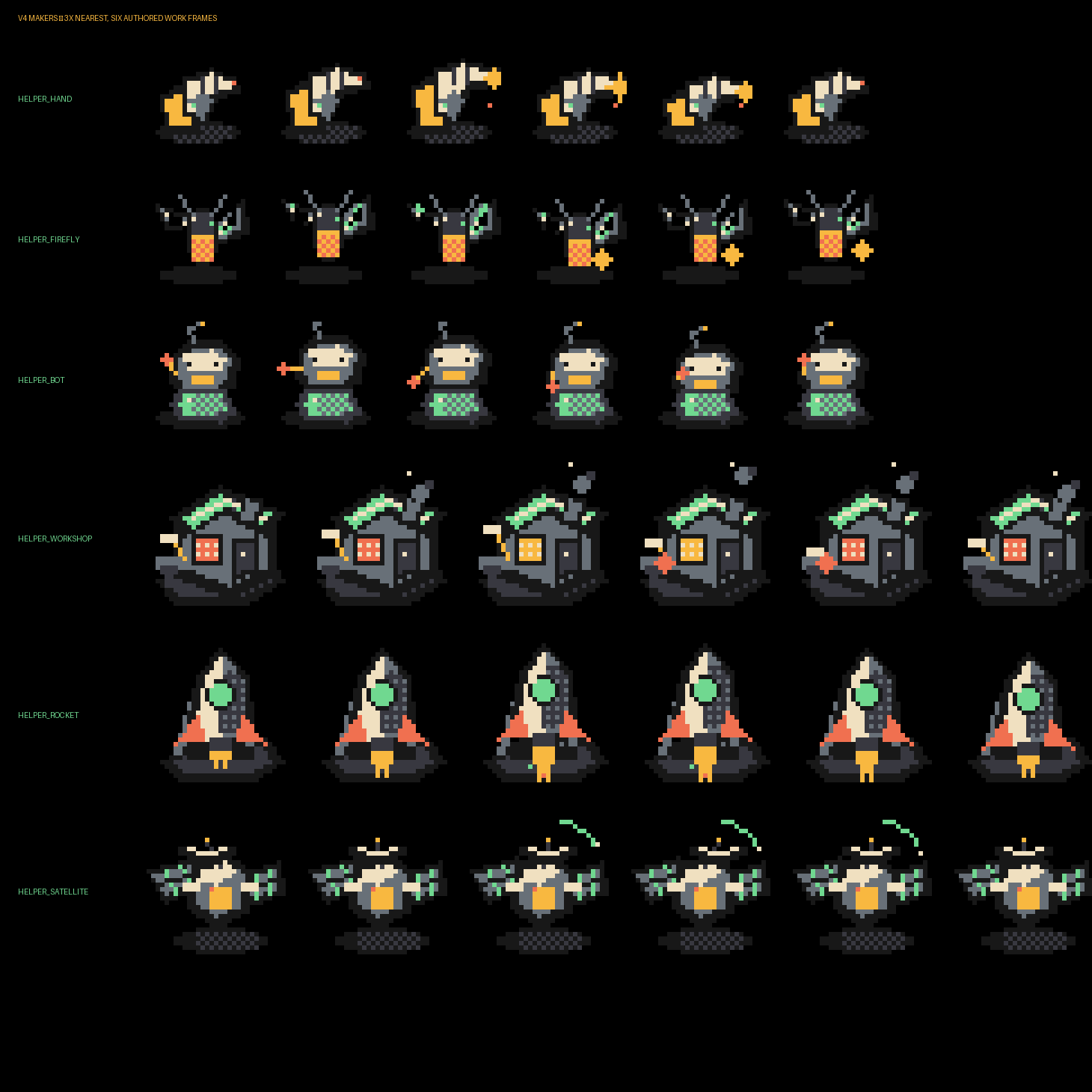
v4 changed isolated icons into a world:
- Core expanded to 160×160 with an idle loop.
- Six Maker families occupied visible orbits and workshop displays.
- Directional dithering gave buildings, rockets and satellites material structure.
fx_tap / grow / loopintegrated with runtime pages.
v5 / CONSOLE-RGB16 OUTLINED RELIC
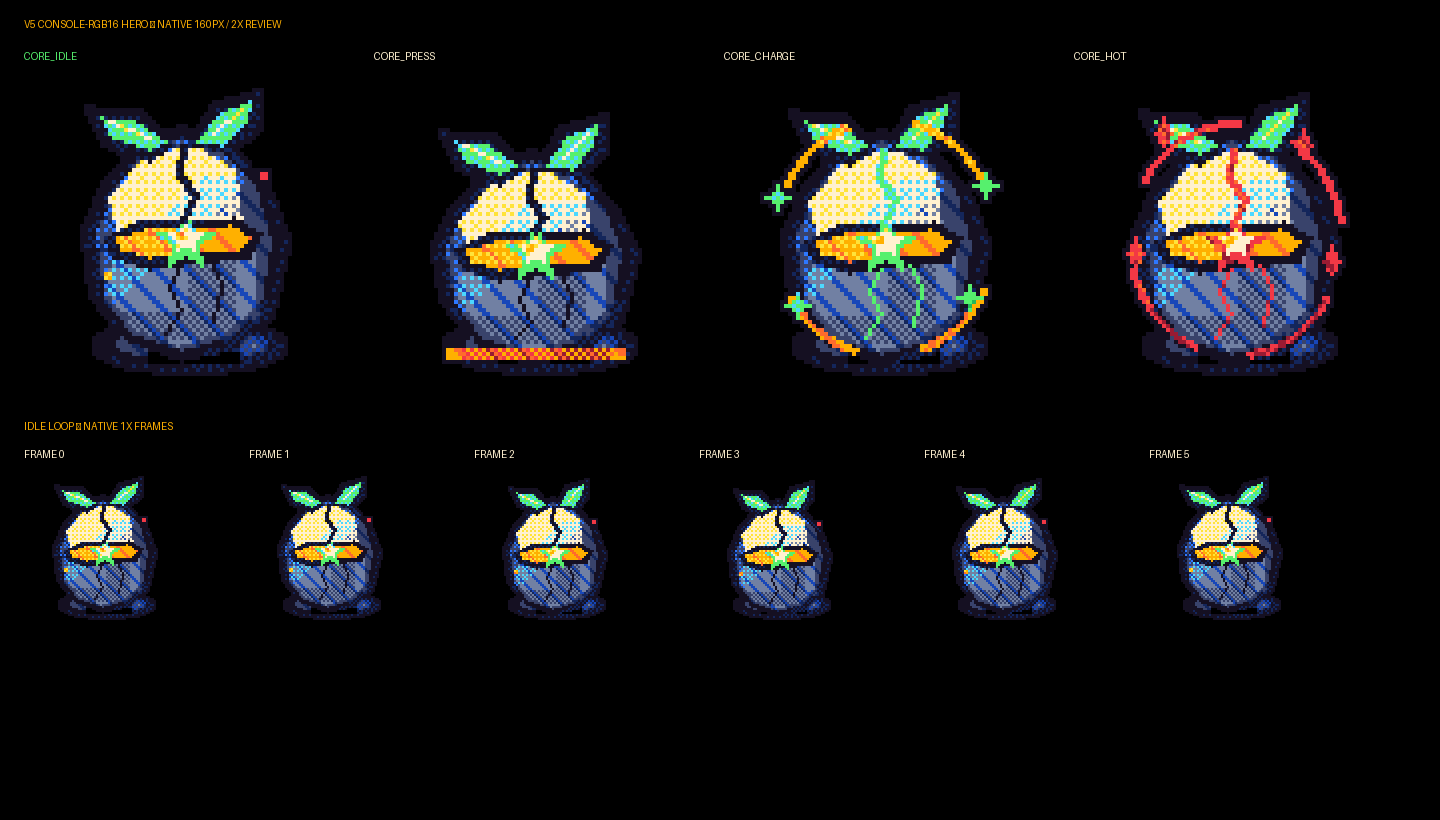
v5 became the web visual golden version:
- Up to 16 colors with saturated classic red, yellow and blue.
- Continuous 2 px dark outlines and blue inner edges.
- Material-direction dithering rather than uniform noise.
- Active/owned states reduced to corner marks instead of covering silhouettes.
- CJK bitmap fixes for proportions, title shadows and shell consistency.
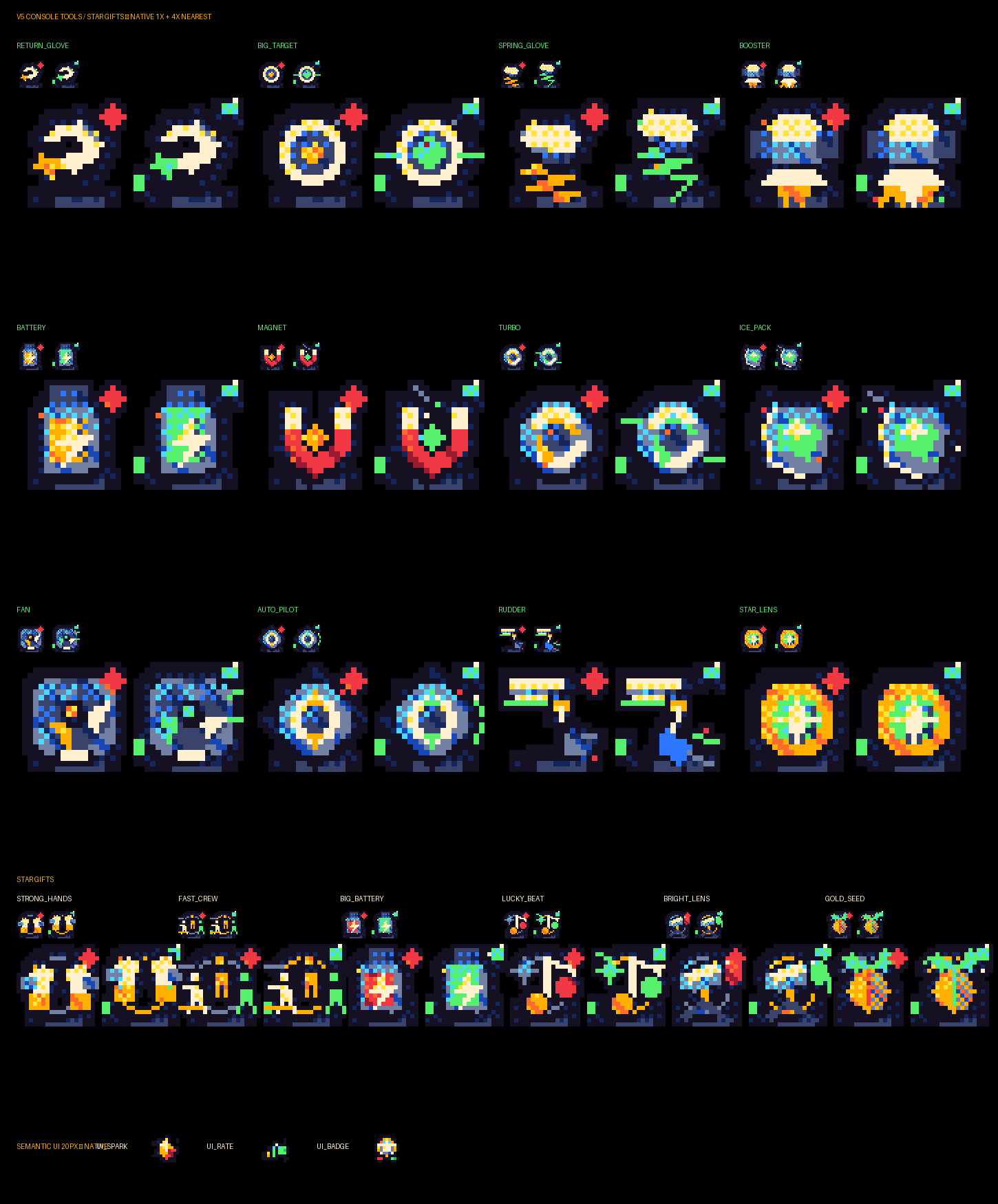
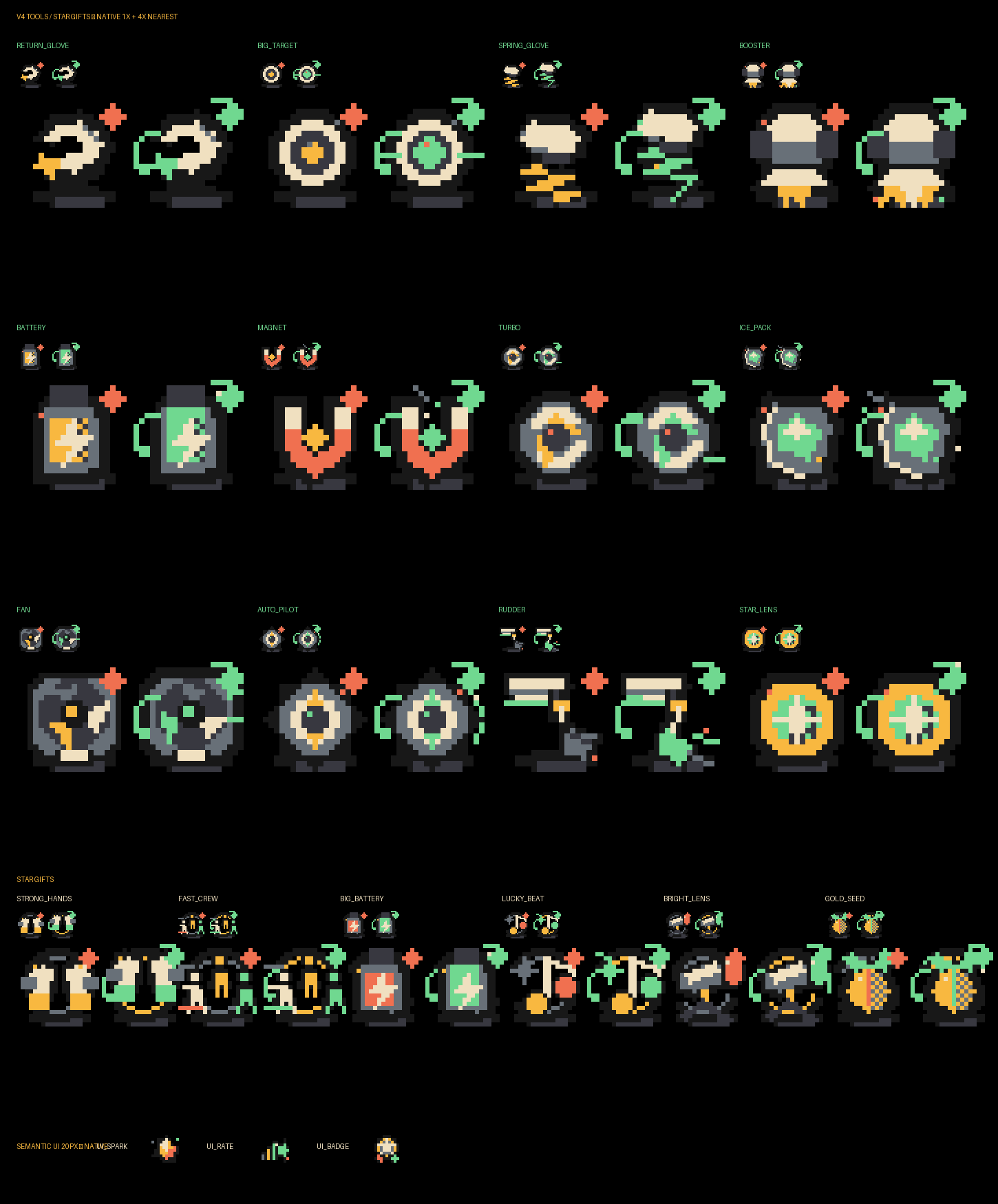 V4 ICONSV5 ICONS
v6 / OLED DEVICE
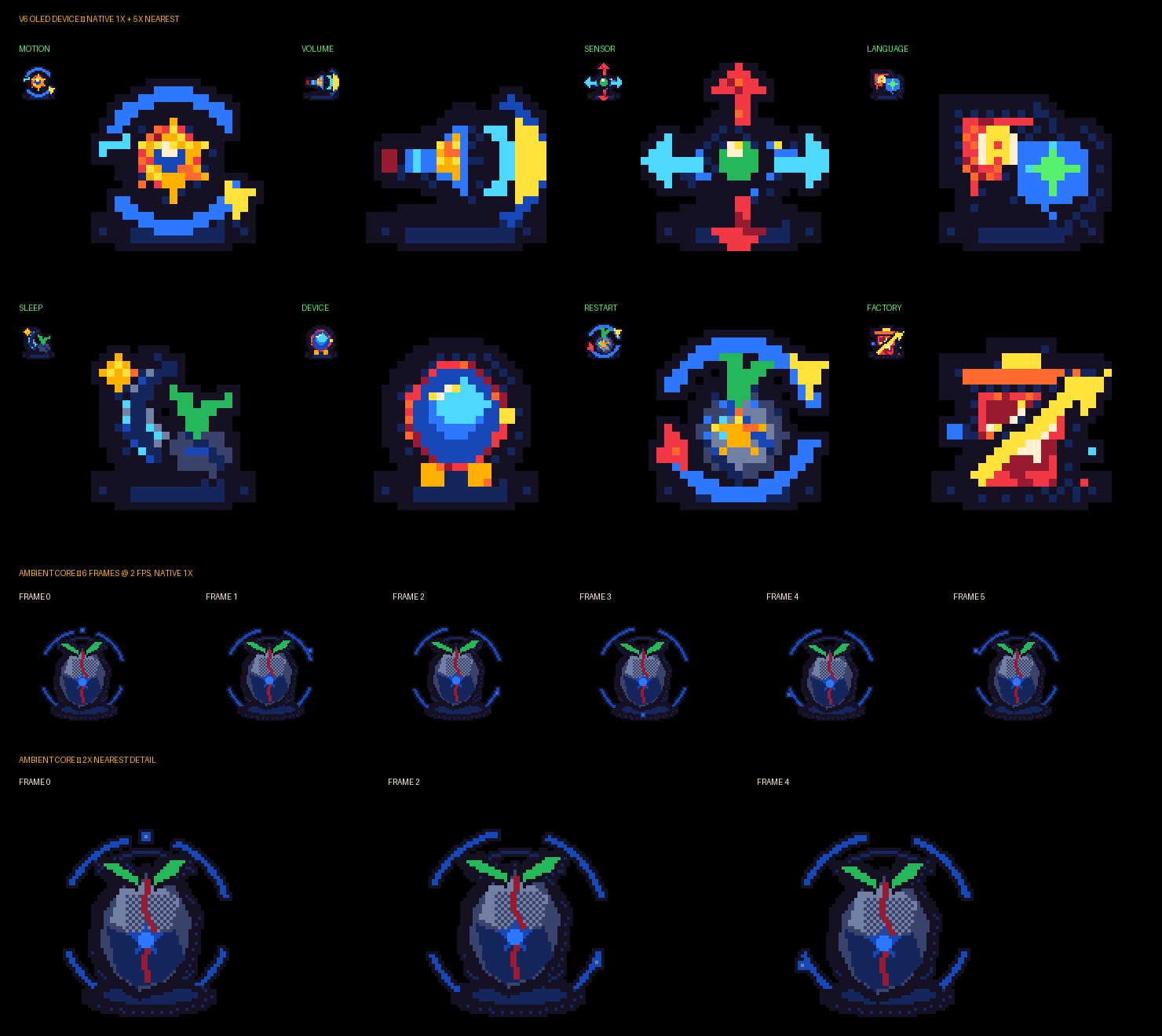
v6 added a six-frame sleeping core, settings icons and more CJK glyphs for a real device. Assets now had to survive RGB565, binary packing, PSRAM budgets and physical bezel clearance.
Effect evolution
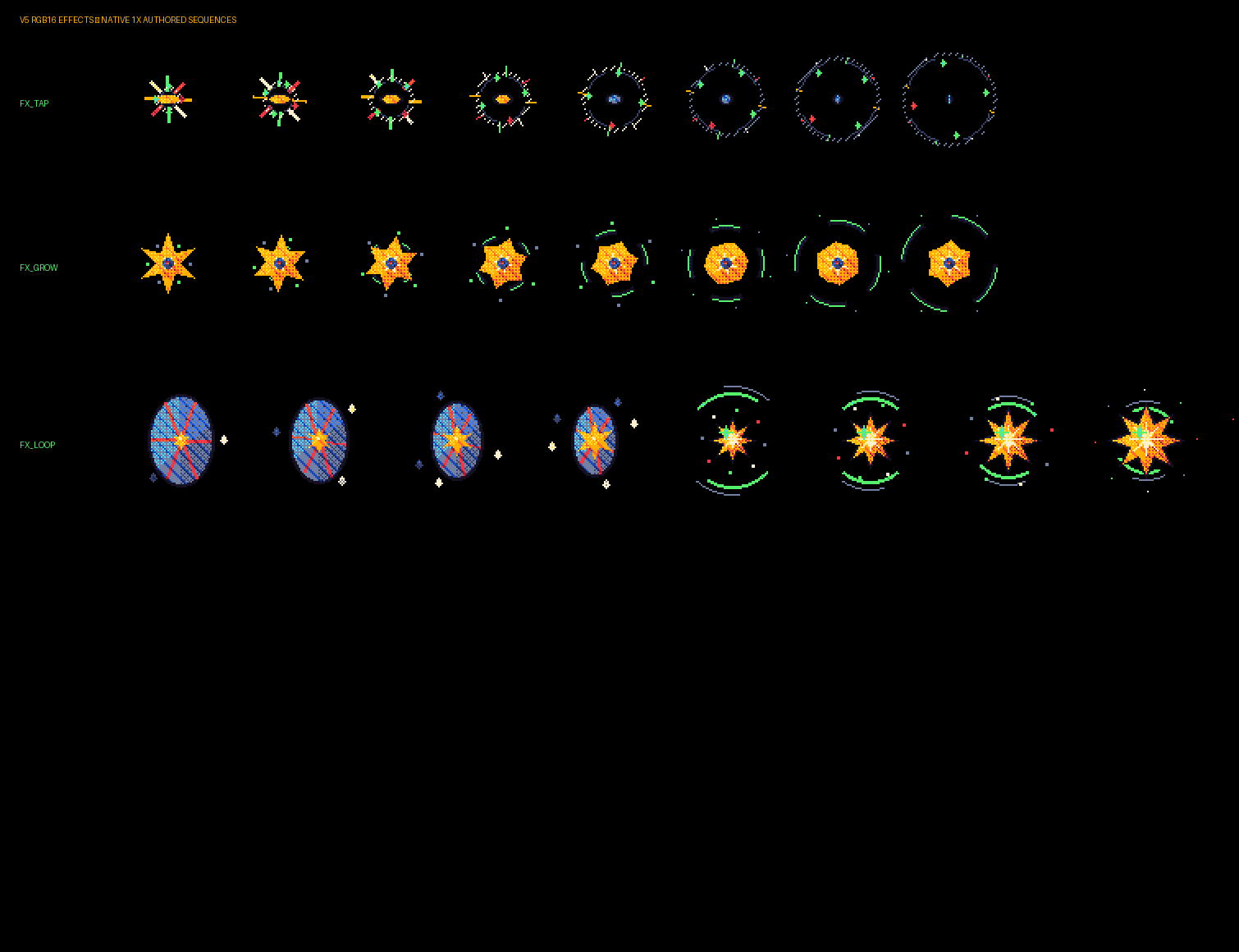
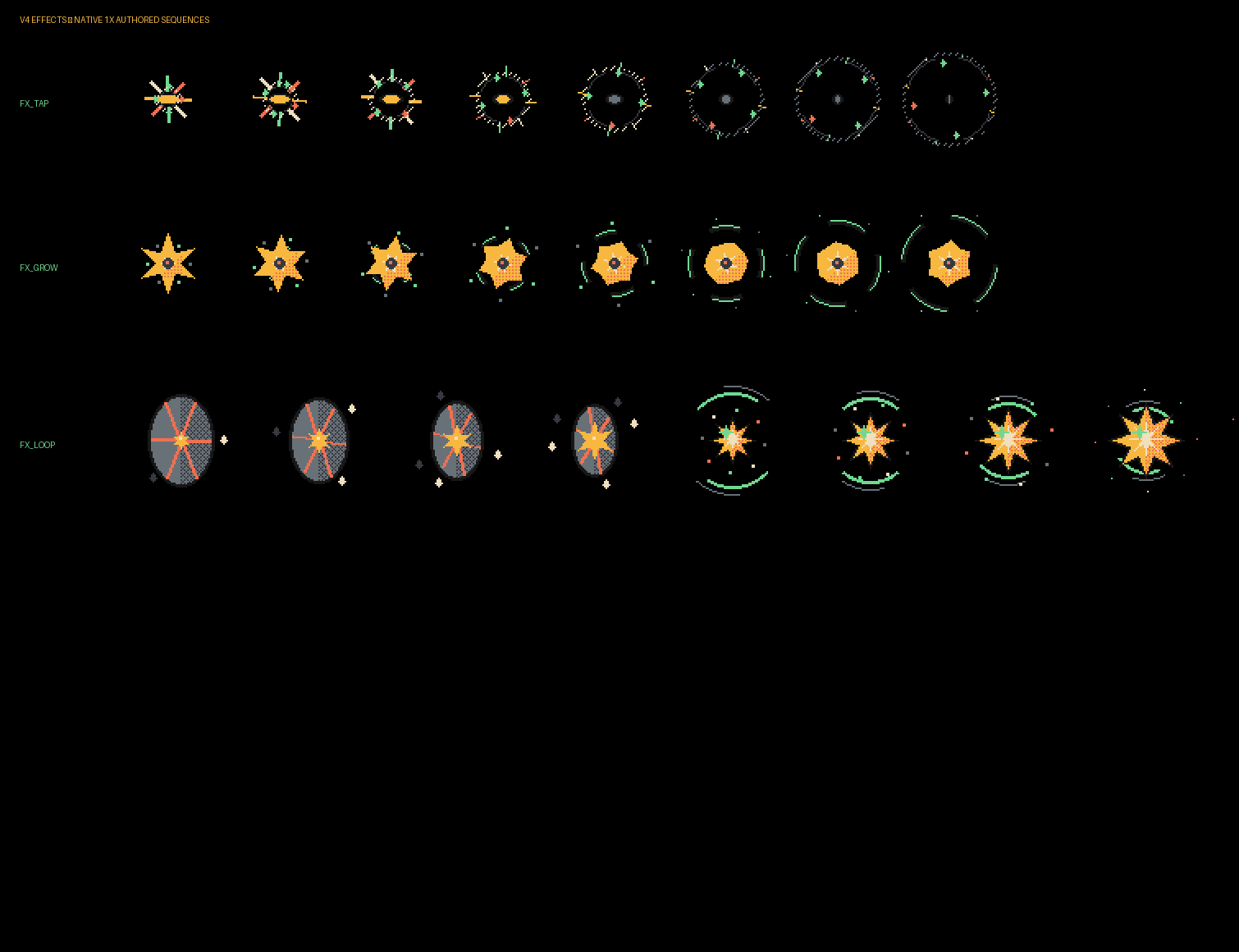 V4 FXV5 FX
Late improvement did not mean adding frames. Every frame needed a legible black/RGB565 silhouette and correct swept bounds for sparse tails under partial refresh.